

Cuthbert Landscape Services
Sign up now for autumn service and enjoy a vibrant, worry-free yard all season long.
Get a Free QuoteLandscape Services Tailored for Cuthbert, Georgia
Cuthbert Lawns, Cared for by Locals
Cuthbert’s unique climate—with its hot, humid summers and mild winters—means lawns here face challenges like summer drought stress and occasional salt exposure from winter road treatments. Shaded lots in neighborhoods near Andrew College or around Greenwood Park often require specialized turf management to combat moss and patchy growth, while properties on the rolling terrain near the Chickasawhatchee Creek must address soil erosion and drainage issues. Our services are designed with these local factors in mind, ensuring your landscape thrives year-round. For more information about the city’s parks and community resources, visit the official Cuthbert website.
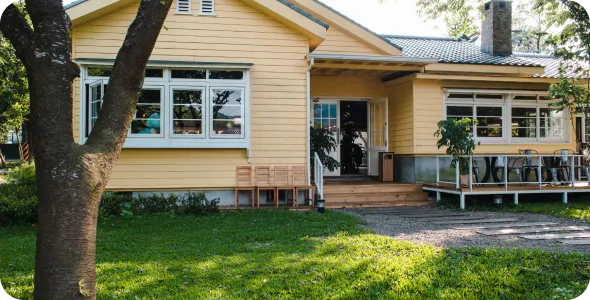
Our Cuthbert Landscaping & Yard Care Services
Cuthbert Gardening Services
Cuthbert Yard Clean Up
Why Choose Cuthbert Landscape Services


Cuthbert Homeowners Trust Us
-
Expert Lawn Maintenance
-
Reliable Scheduling
-
Competitive Pricing
-
Professional Team
-
Satisfaction Guarantee
-
Personalized Service
Contact Your Local Cuthbert Public Works or Solid Waste Department for Green Waste Info
Cuthbert, located in Randolph County on the South Georgia Coastal Plain, manages yard waste through its Public Works Department. Residents should bundle branches under four feet in length and place bagged leaves, grass clippings, and hedge trimmings curbside on scheduled collection days. Plastic bags are discouraged; biodegradable bags or open containers are preferred. Storm debris from summer thunderstorms or tropical weather events is collected on an as-needed basis following municipal announcements. Commercial landscapers operating in Cuthbert must arrange separate disposal and may not use residential curbside pickup. Blowing or dumping clippings, leaves, sediment, or fertilizer granules into streets, ditches, storm drains, or streams is strictly prohibited under the Clean Water Act and local stormwater protection standards. Residents can contact the city directly for drop-off site hours and residency verification requirements.
Cuthbert Public Works Department
215 College Street, Cuthbert, GA 39840
Phone: (229) 732-2711
Official Website: Cuthbert Public Works Department
Lawn Care Regulations & Permits in Cuthbert, GA
All commercial lawn care operators applying pesticides in Cuthbert must hold valid licenses under the Georgia Pesticide Use and Application Act of 1976 and the Georgia Pesticide Control Act of 1976. Verify any applicator's credentials through the Georgia Department of Agriculture - Search for Pesticide Applicators. Fertilizer products sold and used in Georgia are regulated under the Georgia Fertilizer Act of 1997, though local stormwater ordinances may further restrict application timing near waterways. Outdoor watering in Cuthbert follows statewide Georgia Water Conservation rules, including odd/even address schedules and restrictions against midday irrigation. Noise ordinances limit power equipment use during early morning and late evening hours. Commercial operators must maintain a valid occupation tax certificate with the City of Cuthbert and carry liability insurance.
Georgia Department of Agriculture
19 Martin Luther King Jr. Drive SW, Atlanta, GA 30334
Phone: (404) 656-3600
Official Website: Georgia Department of Agriculture
What Neighborhoods Do We Serve in Cuthbert, GA?
Cuthbert's neighborhoods reflect the sandy-loam soils and flat-to-gently-rolling terrain of the South Georgia Coastal Plain. Each area presents distinct lawn care considerations:
- Downtown Historic District — Mature pecan and oak canopy creates heavy shade, favoring centipedegrass and St. Augustinegrass. Older lots have compacted sandy loam requiring aeration. Historic preservation standards influence landscape appearance.
- Andrew College Area — Open, sunny campus-adjacent lots support bermudagrass and bahiagrass. Sandy soils drain quickly, demanding attention to nutrient leaching and irrigation efficiency.
- East Cuthbert / US-82 Corridor — Newer residential properties with full-sun exposure and sandy soils. Bermudagrass dominates, but drought stress between rain events is common. Proximity to drainage ditches requires careful fertilizer placement.
- West Cuthbert / GA-37 Corridor — Mixed residential lots with moderate tree cover. Centipedegrass thrives in lower-input settings. Runoff channels along road shoulders need sediment protection.
- Fletcher Henderson Neighborhood — Established residential area with mature pines producing heavy straw litter. Soil acidity tends to be higher, and shade thinning is a recurring challenge.
- South Cuthbert / Dawson Road Area — Larger rural-edge lots with open pasture transitions. Bahiagrass and bermudagrass perform well in full sun, but nematode pressure in sandy soils can weaken turf stands.
Soil data from the USDA Web Soil Survey confirms Randolph County's predominance of Orangeburg, Norfolk, and Tifton sandy loam series—well-drained soils that require deliberate fertility and moisture management.
Partnering With Cuthbert's Stormwater, Environmental, or Sustainability Office
Cuthbert's Public Works operations oversee stormwater conveyance and drainage maintenance in coordination with state guidelines from Georgia EPD - Stormwater and Georgia EPD - Municipal Stormwater. The city sits within the Chattahoochee River watershed, making nutrient and sediment runoff prevention essential. Sustainable lawn care practices that protect local waterways include:
- Proper mulching around beds and tree rings to reduce bare-soil erosion
- Grasscycling to return nitrogen to sandy soils naturally
- Compost topdressing to improve organic matter and moisture retention
- Avoiding fertilizer application before heavy rain forecasts
- Maintaining vegetated buffers along drainage ditches and low-lying areas
- Integrating native, drought-adapted plantings to reduce irrigation demand
Coordination with the Georgia Soil and Water Conservation Commission - Urban Erosion & Sediment Control ensures that any land-disturbing lawn renovation activities follow proper erosion control protocols.
Georgia Environmental Protection Division
2 Martin Luther King Jr. Drive SE, Suite 1456 East, Atlanta, GA 30334
Phone: (404) 656-4713
Official Website: Georgia Environmental Protection Division
Top Cuthbert Lawn Problems (and How We Solve Them)
South Georgia's sandy Coastal Plain soils and long, hot growing season create a specific set of turf challenges in Cuthbert. Based on guidance from UGA Turfgrass and UGA Lawn Care & Landscaping:
- Nutrient leaching in sandy soils — Light, frequent fertilizer applications using slow-release nitrogen sources prevent nutrients from washing below the root zone. Soil testing through the Randolph County UGA Extension office guides precise rates.
- Drought stress between rain events — Sandy soils lose moisture rapidly. Deep, infrequent irrigation in early morning hours encourages deeper root growth in bermudagrass and centipedegrass.
- Mole cricket damage — A major South Georgia pest that tunnels through sandy soils, destroying turf roots. Targeted bait applications in late spring when nymphs are small provide the most effective integrated pest management.
- Nematode pressure — Sandy soils harbor plant-parasitic nematodes that weaken centipedegrass and bermudagrass. Nematode assays guide management decisions, including cultivar selection and organic matter improvement.
- Large patch disease — Warm, humid conditions and overwatering promote this fungal disease in centipedegrass and zoysiagrass. Proper mowing height, reduced fall nitrogen, and improved drainage are primary defenses.
- Armyworm infestations — Late-summer armyworm outbreaks can devastate bermudagrass lawns overnight. Early scouting and threshold-based treatment minimize damage and chemical use.
- Weed pressure after summer rain — Crabgrass, goosegrass, and tropical signalgrass exploit thin turf. Pre-emergent herbicide timing aligned with soil temperature monitoring is critical.
UGA Cooperative Extension — Randolph County
Court Square, Cuthbert, GA 39840
Phone: (229) 732-2311
Official Website: UGA Cooperative Extension
What Makes Lawns in Cuthbert Different From the Rest of Georgia?
Cuthbert sits in USDA Hardiness Zone 8b on the lower Coastal Plain, distinguishing it sharply from Piedmont red-clay suburbs and North Georgia mountain-fringe communities. Key regional differences include:
- Sandy, well-drained soils — Unlike Metro Atlanta's compacted red clay, Cuthbert's Orangeburg and Tifton sandy loams drain rapidly, requiring more frequent fertility inputs and organic matter improvement rather than aeration for compaction.
- Extended warm-season growing period — Approximately 240-260 frost-free days allow bermudagrass and centipedegrass to thrive far longer than in North Georgia, but also extend pest and disease pressure windows.
- Lower-input turf options — Centipedegrass and bahiagrass perform well here with minimal fertilization, unlike the high-input fescue lawns common in the Piedmont.
- Nematode and mole cricket vulnerability — Sandy soils harbor pests rarely problematic in clay-heavy regions farther north.
- Rainfall pattern and drought cycles — Summer thunderstorms deliver intense but inconsistent moisture, and sandy soils cannot store water the way clay soils do, making irrigation management fundamentally different.
- Flat terrain with ditch drainage — Stormwater moves through roadside ditches and low swales rather than the steep creek corridors of North Georgia, requiring different runoff management strategies.
Supporting Local Events in Cuthbert With Lawn Expertise
Professional lawn care supports Cuthbert's community life through preparation and maintenance of public green spaces. Key areas of involvement include:
- Preparing athletic fields at Randolph-Clay High School and local recreation areas for football, baseball, and soccer seasons
- Maintaining turf at Randolph County parks for community gatherings and family events
- Supporting downtown Cuthbert festival grounds and the historic courthouse square for seasonal celebrations
- Assisting with cleanup and turf recovery after summer thunderstorms, tropical storm remnants, and high-wind events
- Coordinating with Cuthbert Parks and Recreation for mowing schedules around youth sports programs
- Supporting school campus beautification and community volunteer cleanup days
- Providing guidance on turf recovery following drought stress or flood damage in low-lying park areas
Cuthbert Parks & Recreation Department
215 College Street, Cuthbert, GA 39840
Phone: (229) 732-2711
Official Website: Cuthbert Parks & Recreation Department
Eco-Friendly Landscaping Backed by Cuthbert's Water-Saving and Green Initiatives
Aligning with statewide Georgia Water Conservation goals and Chattahoochee watershed protection priorities, environmentally responsible lawn care in Cuthbert emphasizes:
- Smart irrigation practices:
- Programming controllers for early-morning watering only
- Calibrating zones to match sandy-soil infiltration rates
- Selecting drought-tolerant bermudagrass and centipedegrass cultivars
- Reducing irrigated turf area in low-use zones with native groundcovers
- Reduced-chemical approaches:
- Compost topdressing to build organic matter in sandy soils
- Integrated pest management with scouting-based treatment thresholds
- Proper fertilizer timing to prevent leaching into the Chattahoochee watershed
- Pollinator-friendly bed plantings using regionally adapted species per UGA Invasive Species guidance
- Lower-emission operations:
- Battery-powered mowers, trimmers, and blowers where feasible
- Grasscycling to reduce waste hauling and return nutrients to soil
- Local mulch reuse from municipal brush chipping programs
- Efficient routing to minimize fuel consumption and vehicle idling
National Weather Service — Tallahassee Office
1017 Academic Way, Tallahassee, FL 32306
Phone: (850) 942-8833
Official Website: National Weather Service Offices
U.S. Environmental Protection Agency, Region 4
61 Forsyth Street SW, Atlanta, GA 30303
Phone: (404) 562-9900
Official Website: U.S. EPA Region 4
Proudly Serving These Streets and Areas in Cuthbert
Our service coverage spans every neighborhood and corridor in Cuthbert, organized by area:
- Downtown / Central Cuthbert:
- College Street, Blakely Street, Court Square, Church Street, Andrew Street, Webster Street, Randolph Street
- Cuthbert Courthouse Square, Andrew College campus vicinity
- North Cuthbert:
- North Randolph Street, Lumpkin Road (GA-37 North), Dawson Street, Pecan Street
- Residential areas near Randolph County government offices
- East Cuthbert:
- US-82 East (Dawson Highway), Howard Street, Spring Street, Pine Street
- Properties along the eastern drainage corridors
- South Cuthbert:
- South Randolph Street, Dawson Road, Blakely Highway (US-27 South)
- Rural-edge residential lots transitioning to agricultural land
- West Cuthbert:
- GA-37 South (Blakely Road), Hamilton Street, Broad Street, Magnolia Street
- Established residential blocks with mature tree canopy
- Notable Landmarks and Special Areas:
- Randolph-Clay High School grounds, Fletcher Henderson Park, Randolph County Library, Andrew College, Greenwood Cemetery vicinity, Cuthbert City Park
- Properties adjacent to drainage ditches and low-lying areas require special attention to stormwater buffer maintenance and erosion prevention
Georgia Soil and Water Conservation Commission
4310 Lexington Road, Athens, GA 30605
Phone: (706) 552-4470
Official Website: Georgia Soil and Water Conservation Commission